The $1.8 Trillion Shift: Why Wellness Real Estate Is Outgrowing Construction Roughly 8-to-1
By Peter Hoffman, Founder, Platinum Gym Design
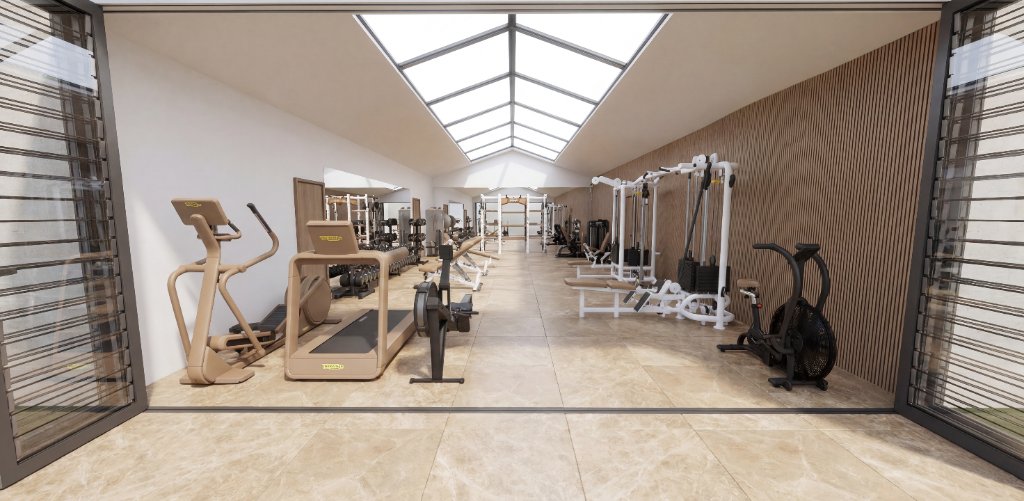
For two decades, the conversation about a gym — at home, in a hotel, in a Class A building — started with equipment. Which brand, which machines, how many of them. Capital has quietly stopped asking that question. The smart money is no longer buying equipment. It's buying the room.
The numbers behind that shift are not subtle.
The fastest-growing category in the built world
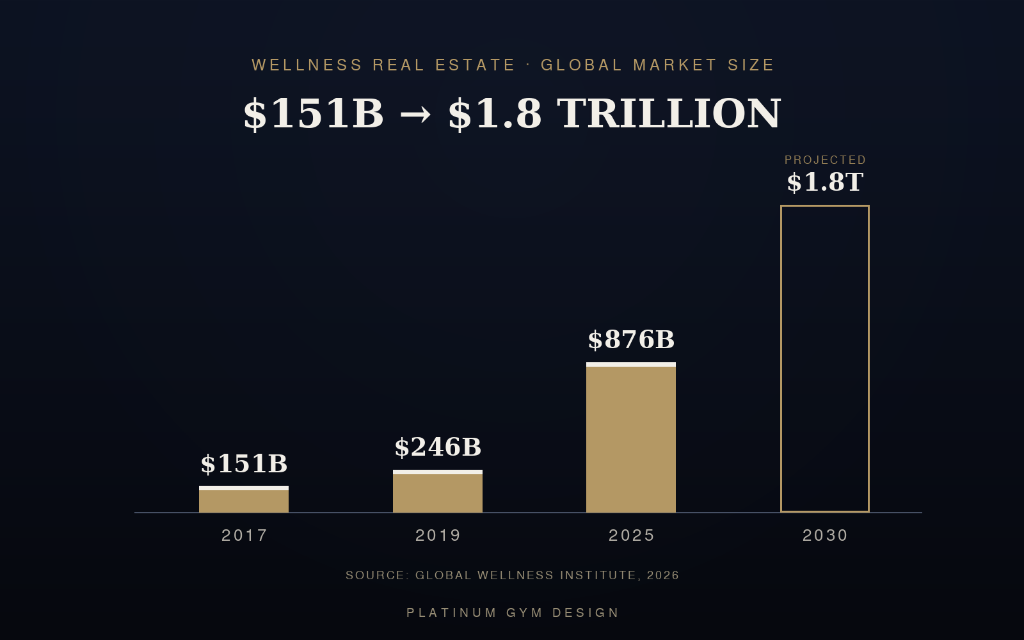
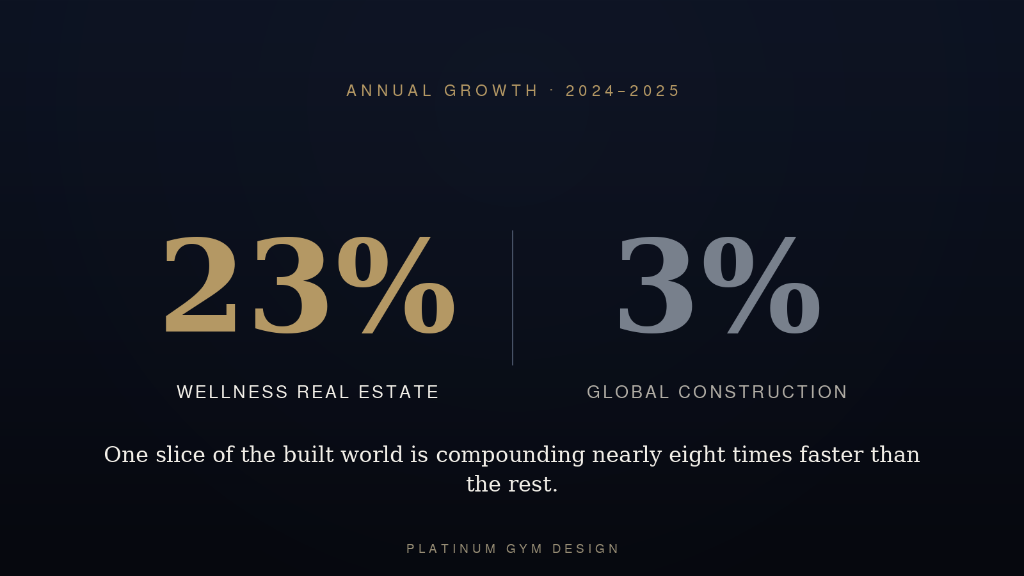
According to the Global Wellness Institute, wellness real estate — buildings designed and operated to support the health of the people inside them — has grown from $151 billion in 2017 to $876 billion in 2025, and is forecast to reach $1.8 trillion by 2030. That is a 23.6% average annual growth rate since 2019: roughly double the next-fastest wellness sector, and nearly eight times the pace of global construction overall, which grew about 3% over the same recent year. The United States is the single largest national market, at $254 billion.
When one slice of construction compounds eight times faster than the rest of construction, that is not a trend. It's a repricing.
The premium is measurable, not aspirational
This isn't sentiment — it shows up in rent rolls and resale prices. The Global Wellness Institute reports that wellness-designed homes and communities at the middle-to-upper end of the market command resale values 10% to 25% higher, while wellness-focused commercial buildings have demonstrated a 4.4% to 7.7% rental premium per square foot (GWI analysis, with the commercial figure drawn from MIT research). The America at Home Study — a national survey of roughly 16,000 buyers across four waves since 2020 — named wellness the number one purchase motivator.
The same pattern holds across asset classes. In hospitality, a 2024 ILTM/Hyatt/Altiant survey of affluent travelers found that 62% call wellness facilities and services very important or essential to their choice of hotel, with roughly three in five willing to pay more for a hotel that has them. In multifamily, the 2022 NMHC/Grace Hill renter survey found that 70% of renters were interested in — or wouldn't rent without — a fitness center.
The part the spreadsheet misses
Here is what a decade on a gym floor taught me that the market data can't: capital is flowing into this category faster than competence is. A wellness amenity only earns the premium if it actually gets used — and most don't. A fitness floor specified from a catalog, dropped into a dead corner, and lit like an operating room will photograph well and train badly. It will sit empty by year two.
The premium isn't paid for the equipment in the room. It's paid for whether the room works — the flow, the light, the sightlines, the proportions. That is a design problem, not a procurement problem, and it's the single most common place these investments quietly fail.
What it means for you
Hotel and resort owners: the fitness facility has moved from cost center to booking driver. The question is no longer whether to invest, but whether your space converts a guest who was deciding between you and the property down the street.
Developers and investors: a fitness amenity now belongs in your underwriting, not your garnish budget. The rent premium is real — but only on space that residents and tenants choose to use.
Homeowners: a properly designed fitness and recovery space is among the highest-conviction additions you can make to a luxury home, both for how you live in it and what it returns at resale.
The $1.8 trillion question
It isn't whether to invest in the room. The market has already answered that. It's whether the room you build still gets used in year three — because that, not the line item, is what the premium is actually paying for.