The 50-Pound Dumbbell Ceiling: The Cheapest Fix With the Loudest Signal in Hotel Fitness
By Peter Hoffman, Founder, Platinum Gym Design
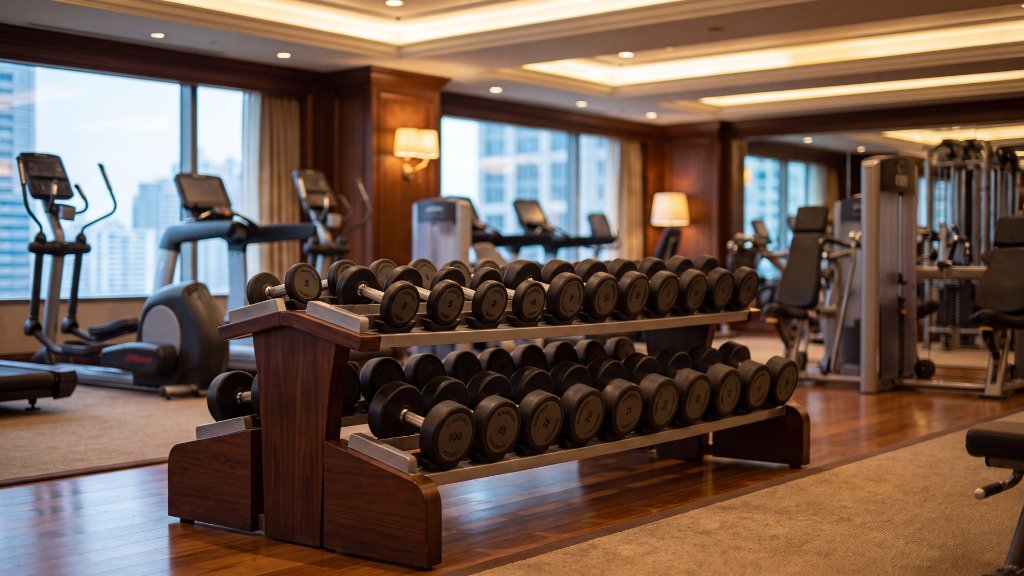
Extending a dumbbell rack from fifty pounds to seventy-five is one of the least expensive decisions on a fitness floor — and one of the loudest signals a property sends its most valuable guests. Here's why the weight ceiling gets set at the drawing stage, not the loading dock.
When we walk into a hotel fitness center, we don't start with the cardio wall or the cable machine or the finish on the mirrors. We look at one thing first: where the dumbbell rack stops. It's a two-second read, and it tells us most of what we need to know about who the room was built for.
More often than not, the rack tops out at fifty pounds or less. That number isn't an accident or a budget casualty — it's the industry default, the spec that gets copied from one project to the next until nobody remembers deciding it. And to the guest who actually trains, fifty pounds is a message, whether the property means to send it or not: this room wasn't built for you.
Who the fifty-pound ceiling turns away
Before founding Platinum Gym Design, our founder spent the better part of a decade on the floor at Equinox — long enough to learn who uses a fitness space hard. The guest who reaches past the fifty-pound dumbbells isn't an edge case. For a lot of common movements — dumbbell presses, rows, goblet squats, Romanian deadlifts, farmer's carries — fifty pounds is a warm-up weight, not a working one. Anyone with a few years of consistent training runs into that ceiling in the first five minutes and quietly recalibrates what the room is for.
Here's the part that should matter to a revenue team: that guest is disproportionately the one you most want to keep. The traveler who trains seriously tends to book deliberately, stay longer, and return. BCD Travel's 2025 hotel booking research found that 41% of business travelers use the hotel gym during their stay, and that just over half actively look for a gym, pool, or spa when choosing where to book — those are the guests filtering properties on the fitness photos before they ever reach the front desk. The fifty-pound rack turns away the exact guest a property's marketing is spending money to win.
None of this is a knock on the properties running a fifty-pound rack today. There's a practical reason for the default: a hotel gym is unstaffed, housekeeping re-racks the weights, and the ceiling has to stay within what the staff can realistically reset. That's exactly why the number we recommend is a deliberate seventy-five — heavy enough that a serious guest notices in the first thirty seconds and marks the room as built for them, and still light enough to stay orderly. Seventy-five is where the signal is loudest and the operational cost is still low.
Why it isn't really about the dumbbells
The reason so many rooms can't just add heavier weight is that the ceiling was never really about the dumbbells. It was set by the room around them.
Heavier free weights ask more of the space. They need honest spacing, so a guest can load and press without reaching into someone else's set. They need flooring that can take a dropped seventy-five-pound dumbbell without denting the subfloor or telegraphing the impact to the guest room below — your slab is a speaker, and the floor beneath is the audience. They need acoustic isolation so the strength zone doesn't turn the corridor into a drum. And they need racks detailed so the heaviest weights live where they're easy to return, because in an unstaffed room the reset has to be effortless or it doesn't happen.
That's why the fifty-pound ceiling is best understood as a structural decision wearing an equipment costume. It gets set at the drawing stage, when the free-weight zone is either given the spacing, the flooring spec, the acoustic treatment, and the rack ergonomics to carry real load — or it isn't. Get that right on paper and extending the rack later costs almost nothing. Get it wrong, and the "cheap" upgrade turns into a renovation.
The cheapest signal on the floor
Set against everything else on a fitness budget, raising the weight ceiling — extending the rack from fifty pounds to seventy-five — is remarkably inexpensive. A heavier dumbbell set and a slightly longer rack are a rounding error next to the cardio package, the strength selectorized line, or a recovery build. What you buy for that money is out of proportion to the cost: a room that reads as serious to the person most likely to talk about it.
And that talk shows up in the numbers. RLA Global's 2025 Wellness Real Estate Report, built with HotStats from the P&L data of more than 11,000 properties, found that hotels with a major wellness offering earned total revenue per occupied room of $561 — against $335 at properties with only a minor one, a premium of nearly 68%. Zoom out and the demand behind that premium is enormous: the Global Wellness Institute puts wellness tourism near $894 billion in 2024 and on track for $1.4 trillion by 2027. None of that premium is captured by a room the serious traveler writes off in the doorway. A great deal of it flows to the room that surprised them.
The rule holds down to the home
The same logic runs straight into the residential work we do in Highland Park and beyond. In a private gym, the owner is almost always the serious user, and the best home gyms we design are built around the load the owner actually moves, with the room detailed to match. Whether it's a fifteen-property portfolio or a single residence, the rule is the same: decide the ceiling on purpose.
Set the ceiling before the drywall
Fifty pounds is a small spec with a loud signal, and seventy-five is a small change with an outsized return. The good news is that it's one of the easiest things to get right — if the conversation happens early. Draw the free-weight zone to carry real weight from the start, and you keep the option to set the ceiling where your guests actually want it. Wait until the room is built, and you inherit whatever the vendor shipped.
The weight ceiling is set at the drawing stage or it's set by default. One of those you choose. The other chooses for you.
Planning a new build or renovation with a fitness amenity on the boards? We review plans at exactly this stage — before the ceiling gets set by default.
→ Schedule your free consultation