Designing for the Traveler Who Won't Skip a Workout
By Peter Hoffman, Founder, Platinum Gym Design
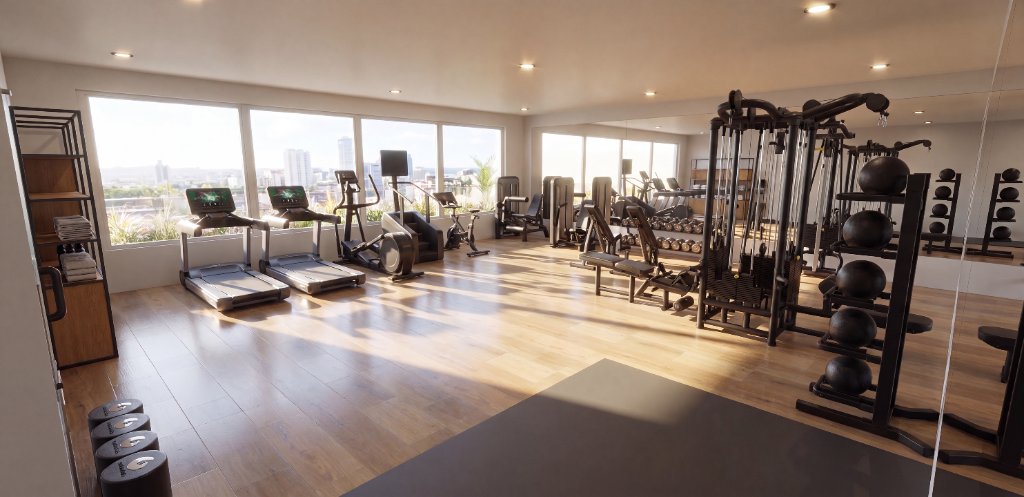
There's a guest who walks into your fitness facility on the first night of a four-day stay, scans the room for about ten seconds, and quietly decides whether your property takes them seriously. They train at home. They'll train on the road. And the gap between a gym they can actually use and a token room with a treadmill and two dumbbells tells them everything about how much thought went into the rest of the building.
That guest used to be a niche. They aren't anymore.
The trip and the workout now happen together
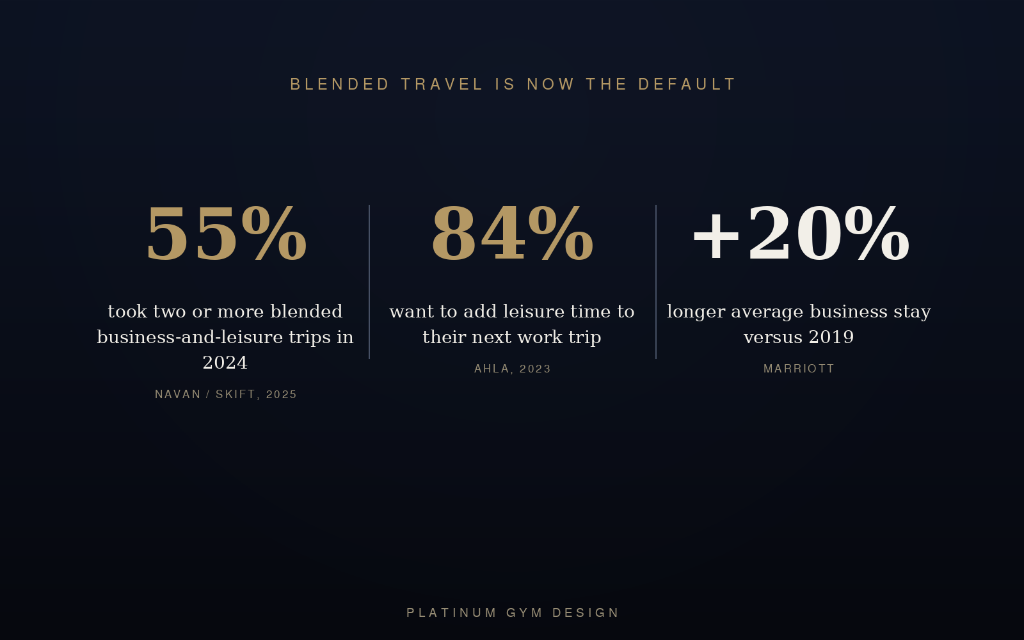
Blended travel — the work trip that absorbs a few days of leisure — has moved from trend to default. Navan and Skift's 2025 corporate travel report found that 55% of business travelers took at least two blended trips in 2024. The American Hotel & Lodging Association found that 84% of travelers wanted to add leisure time to their next work trip, and nearly half had already taken a blended trip in the past year. Marriott has reported the average business stay running about 20% longer than before 2019. Longer stays, blended purpose, and a guest who fully intends to keep their routine while they're under your roof.
The wellness guest is your regular guest
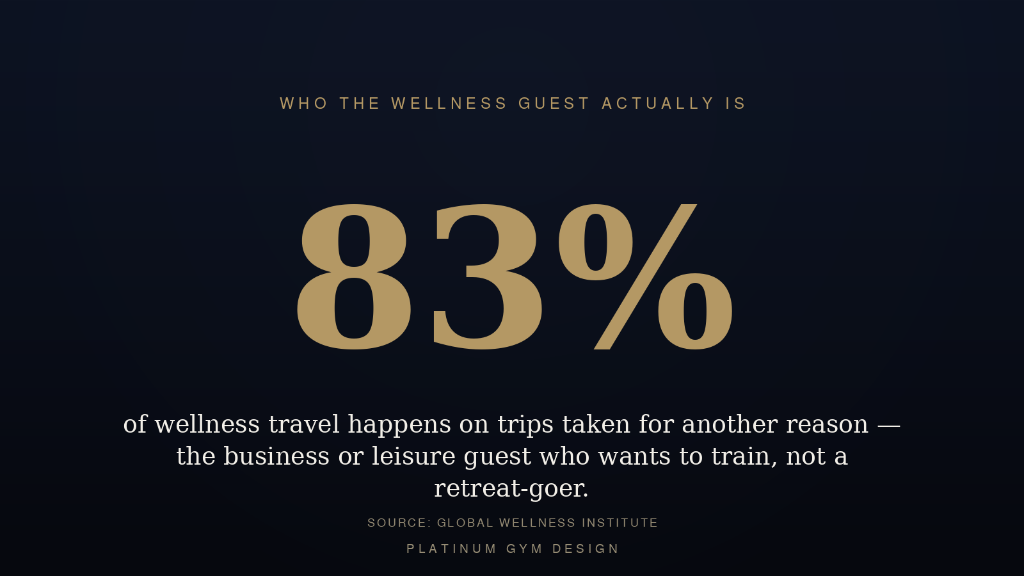
It's tempting to picture the "wellness traveler" as someone booked into a dedicated spa retreat. The data says otherwise. The Global Wellness Institute reports that 83% of wellness tourism is "secondary" — travelers seeking out healthy, active options while on a trip taken for some other reason. In other words, the wellness guest usually isn't a separate market segment. It's the business traveler in your king room who wants a real workout before a 9 a.m. meeting.
And they're worth more. GWI finds that wellness travelers spend roughly 41% more per trip than the typical international tourist, and that wellness trips account for only about 8% of travel but nearly one in five travel dollars. This is not a low-margin amenity-seeker. It is often your highest-value guest.
At the luxury and resort end specifically, a 2024 ILTM/Hyatt/Altiant survey of affluent travelers found that 62% consider wellness facilities and services very important or essential when choosing a hotel. Even a 2022 BCD Travel survey of business travelers placed physical health among the top five factors shaping their decisions, for 48% of them.
What the serious traveler actually judges
Here is what a decade on a gym floor taught me, and what most hotel fitness specs miss: a guest who trains can read a room instantly, and they are not reading the brand on the equipment. They are reading whether they can actually train.
Can they go heavy enough, or does the dumbbell rack stop at 50 pounds? Is there a rack, and floor space to use it without backing into a treadmill? Is the flooring right underfoot, or is it tile that punishes a dropped weight? Is there real ventilation, or does the room feel like a converted closet by minute ten? Can they get in at 5 a.m. before the day starts, or is access tied to front-desk hours?
None of that is exotic. All of it is invisible to a procurement list that orders "a fitness center" by square footage and brand name. The serious traveler notices every one of these things — and forms an opinion of your entire property from a room most owners treat as an afterthought.
The amenity that earns its footprint
The fitness floor is one of the few spaces in a hotel a guest may use every single day of a stay — often more than the restaurant, almost always more than the spa. Designed for the guest who actually trains, it becomes a reason to book, a reason to return, and a quiet signal of quality that reaches well beyond the people lifting in it. Designed for the guest who only glances, it becomes square footage that photographs well and converts no one.
The traveler who won't skip a workout is telling you exactly what they want. The only question is whether the room is built to answer.