How a Premium Gym Amenity Increases Commercial Property Value
By Peter Hoffman, Founder, Platinum Gym Design
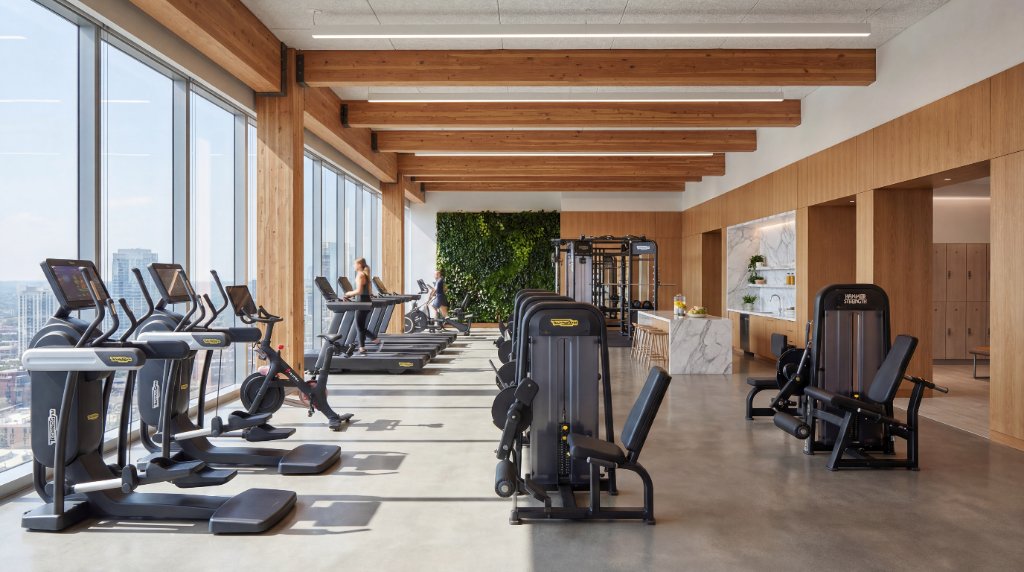
The ROI case for premium fitness amenities in commercial real estate has never been stronger — or better evidenced. Across luxury residential developments, five-star hospitality properties, and corporate campuses, the data consistently demonstrates that a genuinely exceptional fitness amenity generates measurable returns that far exceed the capital investment required to create it.
The Luxury Residential Market
In the luxury residential market, fitness amenities have moved from a 'nice to have' to a 'must have' — and premium gym facilities are increasingly a primary decision driver for buyers. A well-designed, professionally equipped fitness suite commands a meaningful premium over an equivalent property without one. In our experience working across the Dallas market, developments with premium fitness amenities consistently achieve 7-12% higher per-square-foot prices than comparable properties without.
The secondary effect — absorption rate — is equally significant. Properties with outstanding fitness amenities sell faster, attract more qualified buyers, and generate more compelling marketing content. In a competitive luxury market, a fitness amenity that can be genuinely described as world-class is a significant differentiator.
The Hospitality Sector
For hotel operators, a premium fitness facility generates returns across multiple dimensions. Direct revenue — through day passes, personal training, and spa services — is the most visible. But the indirect returns are arguably more valuable: improved guest satisfaction scores, increased likelihood of repeat stays, and the brand positioning value of being able to describe your fitness offering as genuinely exceptional rather than merely adequate.
Our hotel clients consistently report that investment in fitness and wellness facilities generates the highest guest satisfaction impact per dollar of capital deployed of any amenity category. The reason is simple: guests who use a premium fitness facility have a tangible, positive experience that they directly associate with the property and its brand.
The Corporate Campus
The business case for corporate wellness investment is now thoroughly established. On-site fitness facilities are associated with reduced absenteeism, improved employee retention, higher productivity, and reduced healthcare costs. For employers competing for talent in a tight labor market, a genuinely impressive fitness facility is a meaningful recruitment differentiator — particularly for the millennial and Gen Z workforce, for whom health and wellness are primary lifestyle priorities.
The Common Thread
Across all three sectors, the pattern is consistent: the returns generated by a premium fitness amenity are substantially higher than those generated by an adequate one. A mediocre gym is a sunk cost. A genuinely exceptional gym is an asset that generates returns — in property value, in guest satisfaction, in employee retention — for the lifetime of the property. The difference in capital cost between adequate and exceptional is rarely as large as clients expect. The difference in returns is invariably larger.